



Commercial bank money has largely stayed where it was born — inside closed banking networks, moving slowly through correspondent relationships and settlement systems built decades ago. LayerZero and Keeta are now betting they can change that by making tokenized bank deposits transferable across Ethereum, Solana, Base, and the Keeta Network in nine fiat currencies simultaneously.
Summary
Key takeaways
- LayerZero and Keeta have partnered to make tokenized commercial bank deposits transferable across Ethereum, Solana, Base, and the Keeta Network, with a launch scheduled for July 2026.
- Keeta Stablecoins will represent actual commercial bank deposits — not a mixed reserve pool — backed by deposits held through Bivo, a California-licensed money transmitter.
- Nine fiat currencies will be supported at launch: USD, EUR, JPY, CNY, GBP, CAD, MXN, AED, and HKD.
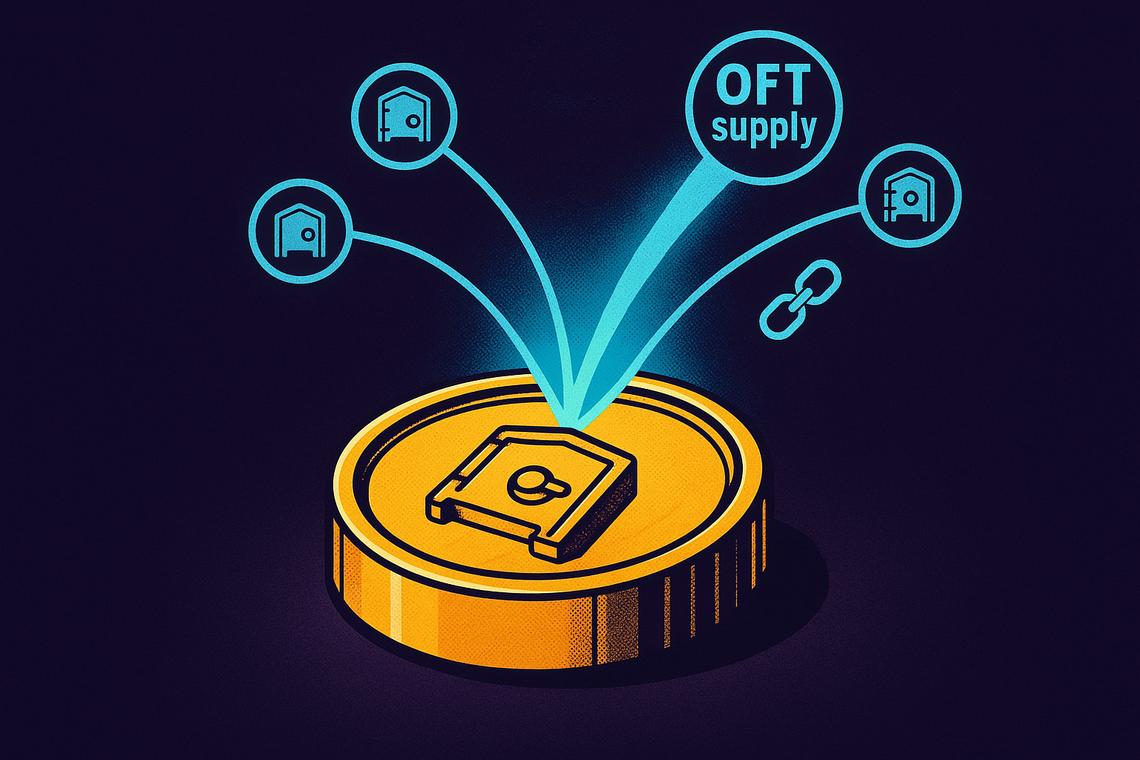
- The tokens use LayerZero’s Omnichain Fungible Token Standard (OFT), which maintains a single global token supply across all supported chains.
- Key operational details — including deposit insurance coverage, reserve reporting, and redemption fees — have not been disclosed.
LayerZero and Keeta bring cross-chain tokenized bank deposits to institutions
The partnership, shared with The Block, combines LayerZero’s omnichain interoperability protocol with Keeta’s compliance-native infrastructure. The goal is straightforward but technically ambitious: let a financial institution hold a token linked to an actual commercial bank deposit and move it seamlessly between four major public blockchains without losing issuer control or regulatory compliance along the way.
This is a meaningful structural departure from how most stablecoins work. Rather than holding a mix of cash, Treasury bills, or other reserve assets, Keeta Stablecoins represent actual commercial bank deposits. The distinction matters to institutional users who need their digital cash to retain the legal and operational properties of bank money, not just price stability.
“The future of institutional money isn’t a walled garden,” Keeta CEO Ty Schenk said, adding that Keeta was built to allow regulated bank money to move freely across chains rather than remaining siloed in closed networks.
How the token standard works
The technical backbone is LayerZero’s Omnichain Fungible Token Standard. Under this model, a single fungible token exists across multiple chains while maintaining one unified global supply. When a transfer occurs, tokens are removed from circulation on the source network and the equivalent amount is credited on the destination network — no wrapped token, no duplicate supply.
Issuing institutions retain full contract authority across every supported network. LayerZero’s infrastructure also provides configurable controls: transfer restrictions, rate limits, pause functions, and separate operational roles. That means a bank or financial institution can enforce its own compliance policies at the contract level, across chains, without surrendering governance to a third-party protocol.
Bivo’s role and the nine currencies at launch
Backing deposits will be held through Bivo, a U.S.-licensed financial technology platform with access to U.S. payment rails and a partner-bank network. Keeta identifies Bivo with NMLS number 2572288; California’s Department of Financial Protection and Innovation lists Bivo as a regulated money transmitter in the state.
The nine fiat currencies confirmed for the July 2026 rollout are: USD, EUR, JPY, CNY, GBP, CAD, MXN, AED, and HKD. LayerZero framed the breadth directly — “the world’s largest institutions need a cash management system that works across fiat currencies and public blockchains.”
What institutions actually get from this
The product targets treasury management, cross-border payments, and multichain settlement. An institution could hold a USD-denominated Keeta Stablecoin, transfer it to Solana for a settlement operation, and receive the equivalent on-chain balance on the destination network — all while the issuer retains the ability to freeze, restrict, or rate-limit transfers if internal policy or a compliance flag requires it.
That combination of programmable compliance and multichain mobility is what separates this structure from both traditional correspondent banking and most existing stablecoin models. It positions Keeta Stablecoins somewhere between a tokenized deposit product — like those being tested by JPMorgan and other large U.S. banks for a possible 2027 launch via a bank-led shared network — and an open blockchain payment rail. The key difference is that the Keeta and LayerZero approach distributes several fiat-linked assets across public chains from day one, rather than operating through a permissioned interbank system.
Keeta is also a Visa Direct payments network partner and has demonstrated infrastructure scale: the network recorded 11.2 million transactions per second during a public stress test conducted with Google’s Spanner engineering team. That figure reflects a stress-test environment rather than expected production volume, but it signals the architecture was designed for high-throughput institutional use.
Issuer control, custody, and the gaps that remain
One of the more pointed questions around the product concerns what token holders actually own. The announcement confirms that commercial bank deposits held through Bivo back the tokens, but it does not state whether individual token holders receive deposit insurance or hold a direct claim against a named bank. Reserve reporting rules, redemption fees, and minimum transaction sizes were also not disclosed, nor were the specific institutions that will issue each currency at launch.
These omissions matter more than they might at first appear. For institutional treasury teams, the legal quality of a deposit-backed token depends entirely on the clarity of those underlying claims. A token that represents a commercial bank deposit is only as strong as the legal framework defining who holds the deposit, under what conditions it can be redeemed, and how it is protected in a stress scenario. Those details remain open heading into the July rollout.
Security risks and the LayerZero bridge record
Cross-chain infrastructure carries real operational risk, and LayerZero’s record on this point is relevant context. In April, attackers drained approximately $292 million from Kelp DAO’s rsETH bridge after compromising infrastructure used by a LayerZero verifier. LayerZero attributed the attack to North Korea’s Lazarus Group and said the exploit targeted Kelp DAO’s single-verifier setup rather than the core protocol. The company subsequently ended support for single-verifier Decentralized Verifier Network configurations and raised its default verification thresholds.
The response shows the protocol can adapt, but the Kelp DAO incident is a concrete example of how cross-chain bridge configurations can become attack surfaces. For a product handling regulated bank deposits at institutional scale, verifier architecture and multi-chain compliance enforcement will face scrutiny that goes beyond what typical DeFi bridges encounter.
LayerZero already supports cross-chain distribution for PayPal’s PYUSD and Ondo Finance’s tokenized stocks and ETFs, so the institutional interoperability footprint is established. Extending it to bank-deposit-backed tokens across more than 170 supported blockchains is a different order of regulatory and operational sensitivity, however — one the July launch will begin to test in practice.
FAQ
What blockchains will the Keeta Stablecoins operate on?
Keeta Stablecoins will transfer across Ethereum, Solana, Base, and the Keeta Network.
Which fiat currencies will be represented by Keeta Stablecoins at launch?
The initial nine fiat currencies are USD, EUR, JPY, CNY, GBP, CAD, MXN, AED, and HKD.
Who holds the backing commercial bank deposits for the Keeta Stablecoins?
Bivo, a licensed money transmitter regulated in California, holds the backing commercial bank deposits.
Are details on deposit insurance and redemption fees disclosed?
No. Details about deposit insurance coverage, reserve reporting, and redemption fees have not been disclosed ahead of the July 2026 launch.
Article produced with the assistance of artificial intelligence and reviewed by the editorial team.
